
Each decision feels reasonable in isolation. But over time, it becomes death by a thousand cuts.
Not just for the people leaving, but for the people who stay.
When reductions happen in small waves, employees assume there will always be another one coming. They pull back. They become more cautious. They stop taking risks and are less likely to offer candid feedback. Work that depends on coordination across teams starts to break down because people narrow their focus to their own function.
The organization doesn’t just get smaller. It gets quieter, more siloed, and less effective.
And by the time leaders see the impact, the issue is no longer just cost. It’s capability.
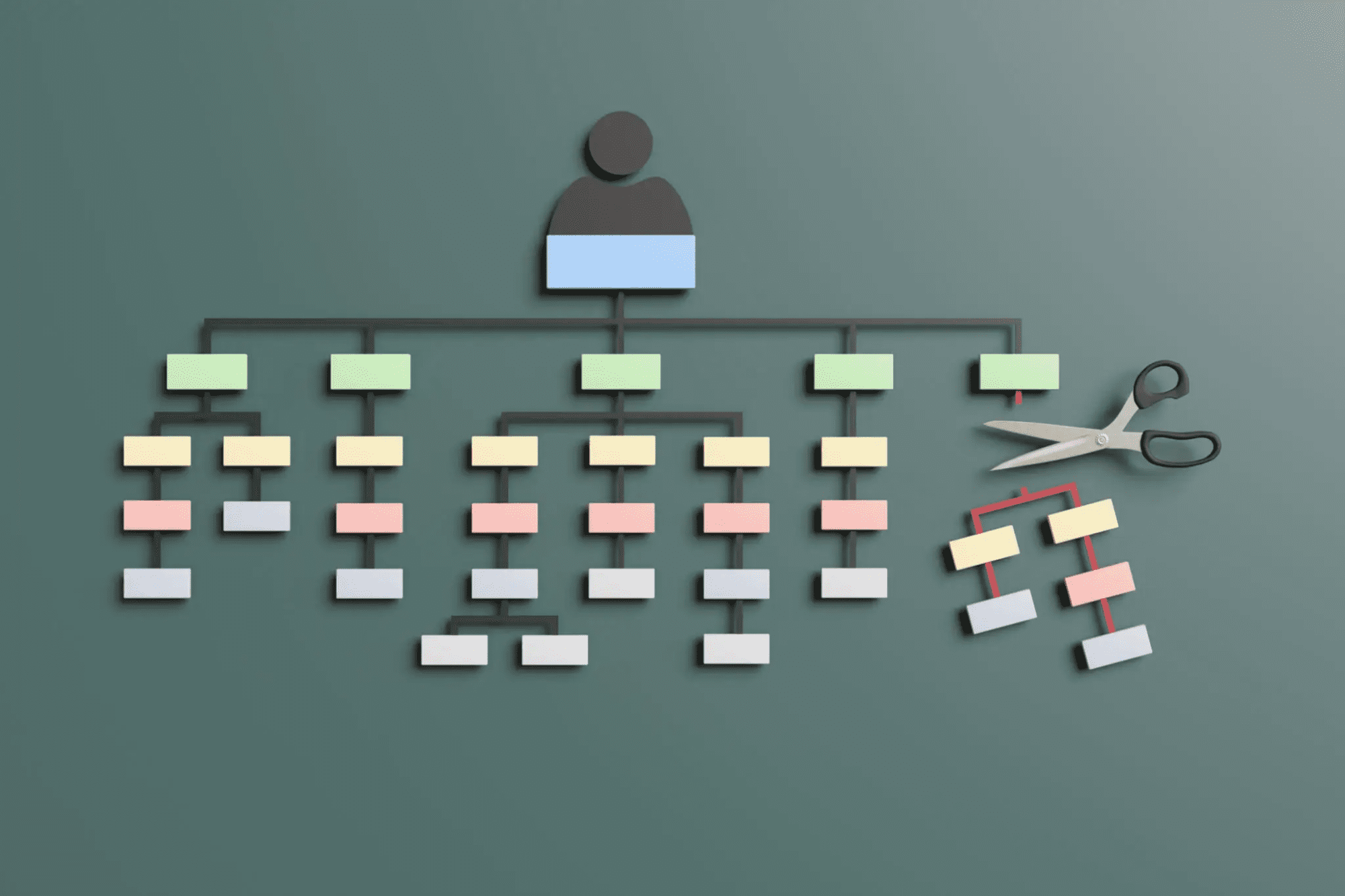
The problem is not that leaders decide to reduce headcount. The problem is how they approach the decision.
Most organizations treat a RIF as a series of individual staffing decisions. A role here. A role there. A way to manage pressure in the moment.
They don’t step back and look at the system.
When a CEO calls me and says, “We’re thinking about laying off a small number of people. What do we do next?” my response is usually some version of:
Okay… who, and help me understand why. What’s going on in the business?
Because the real question isn’t which roles to eliminate. It’s whether the decision will actually solve the problem they think they have.
In the situations that are handled well, leaders slow down before they act.
Not to delay, but to make sure they are solving the right problem.
If the goal is cost reduction, they ask what the organization will stop doing. They look at where inefficiencies exist and whether those can be addressed through structure, process, or clarity of priorities. They consider whether the changes they are making now are enough to stabilize the business, or whether they are setting themselves up to repeat the same decision in a few months.
They also think forward.
What does the organization need to look like in twelve months?
Where will they need to invest?
What capabilities will matter if they are going to grow their way out of the current situation?
Those conversations don’t produce quick answers. But they change the quality of the decision. And often, they change the decision itself.
A RIF is not just a financial adjustment. It’s a change to how the organization works.
Every role sits inside a system of dependencies, workflows, and relationships. When you remove a role, you don’t just remove cost. You change how work gets done.
When decisions are made narrowly, those impacts are rarely considered. Over time, that’s what leads to fractured processes, increased inefficiencies, and more work being done in silos.
This is why repeated small RIFs are so damaging. They don’t just reduce cost. They erode coherence.
There are absolutely times when workforce reductions are necessary.
But when they are approached reactively, without clarity on both the current problem and the future state of the organization, they rarely achieve what leaders intend.
Instead, organizations fall into a pattern. Costs are reduced, capability is lost, inefficiencies increase, and eventually more cuts are required.
That’s the cycle behind many of the situations I’m brought into—often after the second or third round, when the underlying issue hasn’t been fully addressed.
A better place to start is with a different question.
Not: Who should we let go?
But: What problem are we actually trying to solve, and what needs to be true after this decision for us to move forward?
That shift is subtle, but it’s what separates a short-term action from a strategic decision.
Leaders don’t struggle with these decisions because they lack judgment. They struggle because the pressure to act is real, and the path to clarity isn’t always obvious.
If you’re considering a RIF, the most important work often happens before any names are identified. That’s the work that determines whether the decision stabilizes the business—or creates the next problem you’ll have to solve.
And in many cases, it’s the kind of work that benefits from having consistent, experienced support in place before these decisions start to repeat.
Need a sounding board?
If you are seeing these patterns in your organization, it may be worth stepping back and assessing whether your current HR approach matches your stage of growth.
I work with leadership teams to diagnose and address exactly this transition point.
Schedule a Conversation